For Australian businesses that rely on fuel every day, how you refuel can directly affect productivity, safety and operating costs.
Two common options are bulk fuel delivery to onsite storage tanks and onsite refuelling services, where a mobile tanker refuels your equipment or fleet directly.
Both models are widely used across Australia in industries such as construction, mining, agriculture and transport. The right choice depends on your fuel volume, site conditions, compliance requirements and operational priorities.
Here is a practical breakdown to help you decide.
What Is Bulk Fuel Delivery?
Bulk fuel delivery involves transporting large volumes of fuel to your site and storing it in your own fuel tanks.
Your supplier delivers diesel, unleaded petrol, or AdBlue via tanker truck and transfers it into certified onsite storage tanks. Your team then refuels vehicles and machinery as needed.
This model is common across regional Western Australia, remote mining operations, farming properties and transport depots where consistent fuel access is critical.
How Bulk Fuel Delivery Works in Practice
- You install compliant fuel storage tanks onsite.
- Your supplier schedules regular deliveries based on your usage.
- Fuel is transferred into your tank.
- Your staff refuels equipment directly from your storage system.
Once set up, it becomes a streamlined process with a predictable supply.
What Is Onsite Refuelling?
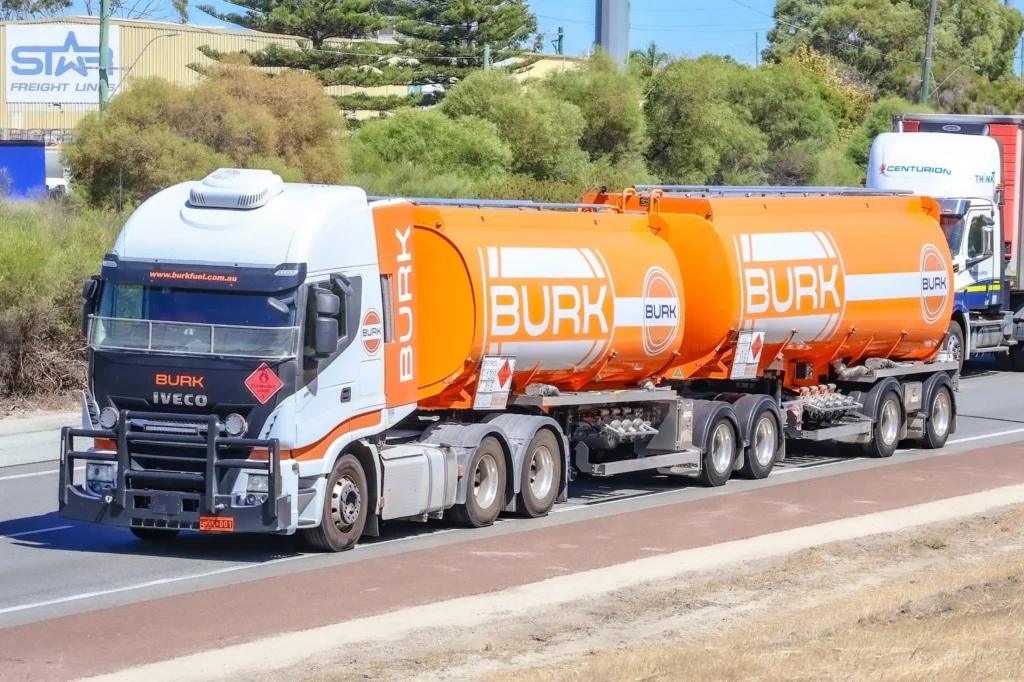
Onsite refuelling, sometimes called wet hire refuelling or mobile refuelling, involves a tanker truck coming directly to your site to refuel equipment, vehicles or generators.
Instead of storing large fuel volumes onsite, the fuel remains in the delivery vehicle until it is dispensed directly into your assets.
This model is popular on short-term projects, civil works, infrastructure builds and locations where installing permanent storage is not practical.
How Onsite Refuelling Works in Practice
- You schedule a refuelling service.
- A tanker arrives at your site.
- The operator refuels each vehicle or piece of equipment.
- You receive a detailed usage report.
This removes the need for onsite tank management.
| Feature / Consideration | Bulk Fuel Delivery | Onsite (Mobile) Refuelling |
| Control & Convenience | Equipment can be refuelled at any time; ideal for 24-hour operations. | Relies on scheduled refuelling visits; works well for fixed schedules. |
| Upfront Infrastructure | Requires capital investment for compliant storage tanks and bunding. | No need to install storage tanks; significantly reduces capital expenditure. |
| Compliance & Safety | Business is responsible for maintaining tanks and managing spill containment. | Supplier retains responsibility for transporting and storing the fuel. |
| Ideal Volume | Best for businesses consuming large volumes of diesel daily. | Best when fuel usage is moderate, irregular, or for short-term projects. |
| Cost Impact | Better pricing per litre at wholesale rates, but includes installation and maintenance costs. | Slightly higher per litre cost, but completely avoids upfront infrastructure investment. |
Comparing the Two Models
While both options achieve the same goal, the operational impact can be quite different.
1. Control and Convenience
Bulk Fuel Delivery
You control your own fuel supply. Equipment can be refuelled at any time without waiting for a tanker to arrive. This is ideal for 24-hour operations such as mining sites or large transport depots.
Onsite Refuelling
You rely on scheduled refuelling visits. If a vehicle runs low outside that window, you may need to wait or arrange an urgent callout. This works well for controlled fleets operating on fixed schedules.
2. Upfront Infrastructure
Bulk Fuel Delivery
It requires compliant storage tanks, bunding and possibly fuel management systems. Installation must meet Australian standards and local council requirements. This is an upfront capital cost.
Onsite Refuelling
With bulk fuel delivered directly to your site or equipment, there is no need to install storage tanks, build bunding, or manage ongoing tank inspections. That significantly reduces upfront capital expenditure while also removing much of the compliance and maintenance burden from your business.
3. Compliance and Safety Responsibility
Bulk Fuel Delivery
You are responsible for maintaining tanks, managing spill containment and ensuring compliance with Australian environmental regulations. Work Health and Safety obligations also apply to fuel handling onsite.
Onsite Refuelling
The supplier retains responsibility for transporting and storing the fuel. Your compliance burden is significantly lower because fuel is not stored onsite long term. For short-term projects, this can simplify operations.
4. Fuel Volume and Consumption
High Volume Users
If your business consumes large volumes of diesel daily, bulk delivery is usually more cost-effective. Wholesale pricing and consistent supply make it the practical choice for:
- Mining operations in regional WA
- Large-scale construction projects
- Agricultural enterprises during harvest
- Transport fleets operating across interstate routes
Low to Medium Volume Users
If fuel usage is moderate or irregular, onsite refuelling can eliminate the need to hold excess stock.
This is common for civil contractors working across multiple short-term projects.
5. Cost Considerations in Australia
Bulk fuel delivery often provides better pricing per litre for high-volume users because fuel is purchased at wholesale rates.
However, you must factor in:
- Tank installation costs
- Maintenance
- Inspection and compliance
- Fuel monitoring systems
Onsite refuelling may carry a slightly higher per litre cost but avoids infrastructure investment.
For many Australian businesses, the decision comes down to whether capital expenditure or operational flexibility is more important.
Industry Examples Across Australia
Mining Operations in Western Australia
Mining sites typically favour bulk fuel delivery.
These operations run continuously, often in remote areas where fuel access is limited. Onsite storage ensures uninterrupted production and reduces the risk of costly downtime. Bulk diesel storage is standard practice across the Pilbara and Goldfields regions.
Construction Projects in Metro Areas
Large long-term construction sites may use bulk delivery with onsite tanks. However, shorter infrastructure projects in Perth or Melbourne often choose mobile onsite refuelling to avoid installing temporary storage systems.
Agriculture and Farming
Farmers across regional WA and Victoria commonly rely on bulk fuel delivery. Harvest season dramatically increases diesel demand. Having fuel stored onsite ensures tractors, headers and generators remain operational during critical windows.
Transport and Logistics Fleets
Fleet depots servicing interstate routes frequently install bulk storage tanks. This allows trucks to refuel overnight at depot rates rather than retail pump prices. Smaller courier businesses may opt for onsite refuelling if fleet size does not justify storage infrastructure.
Questions to Ask Before Deciding
To determine which model suits your business, consider:
|
Answering these questions will clarify whether bulk supply or mobile refuelling aligns better with your operations.
The Bottom Line
Both bulk fuel delivery and onsite refuelling play important roles in Australia’s fuel supply chain.
If your operation is high volume, long-term and remote, bulk fuel delivery typically provides stronger cost control and supply certainty.
If your business is mobile, project-based or moderate in fuel use, onsite refuelling may reduce infrastructure costs and simplify compliance.
The right fuel strategy should support your productivity, minimise downtime and align with Australian safety and environmental standards.
By understanding how each model works in real-world conditions, you can choose the solution that keeps your business moving without unnecessary risk or expense.
For many Australian operators, the answer is not about which is better. It is about which is better for your specific site, usage and growth plans.
You can contact the Burk Fuel team today for a custom site assessment to find out whether onsite storage or mobile refuelling will protect your margins best.