Bulk fuel keeps Australian industries moving. It powers transport fleets, construction projects, mining operations and agricultural equipment across metropolitan and regional areas.
But fuel is also classified as a dangerous good. It is flammable, environmentally sensitive and tightly regulated.
That means bulk fuel transport and storage in Australia must meet strict safety standards at every stage. From terminal loading to tanker transport and onsite storage, compliance is not optional. It protects workers, communities and the environment.
Here is how safety standards apply to bulk fuel operations across Australia.
The Regulatory Framework in Australia
Bulk fuel transport and storage are governed by a combination of federal and state legislation.
At a national level, dangerous goods transport is regulated under the Australian Dangerous Goods Code. Each state and territory then enforces additional requirements under local Work Health and Safety and environmental legislation.
In Western Australia, for example, bulk fuel operations must comply with state based Work Health and Safety regulations as well as environmental protection laws.
The framework covers:
- Vehicle standards
- Driver licensing and training
- Tank construction requirements
- Storage installation standards
- Spill response obligations
- Documentation and record keeping
Compliance ensures fuel is handled safely from origin to end use.
| ⚠️ The Real Cost of Non-Compliance Adhering to AS 1940 and the Dangerous Goods Code is not just a box-ticking exercise. Failing an EPA or WorkSafe audit can lead to operational shutdowns, instantly voided commercial insurance policies, and severe corporate fines. In the bulk fuel industry, strict compliance is your strongest insurance policy against catastrophic downtime and financial loss. |
Safety Standards for Fuel Tanker Transport
Transporting bulk fuel on public roads is tightly regulated in Australia. Because fuel is classified as a dangerous good, every stage of tanker operation is governed by strict national and state-based requirements. These controls are designed to protect drivers, other road users, and surrounding communities.
Tanker Vehicle Design and Compliance
Fuel tankers must be purpose-built and fully compliant with strict dangerous goods specifications. Specifically, all transport equipment must adhere to AS 2809 (Road tank vehicles for dangerous goods). This engineering standard ensures tanks are constructed with certified compartmentalisation to safely store different fuel types, and engineered pressure and ventilation systems designed to safely manage highly combustible vapours.
Vehicles must also be fitted with overfill protection systems to prevent spillage during loading, and clearly displayed hazard placards that identify the class of dangerous goods being transported. These visual identifiers are critical for emergency response situations.
Driver Licensing and Fatigue Management
Drivers transporting bulk fuel must hold the appropriate dangerous goods licence in addition to heavy vehicle qualifications. This ensures they are trained not only in vehicle operation, but also in spill response, load stability, and hazardous materials handling.
Fatigue management laws also apply. Long-distance deliveries across regional Western Australia or interstate freight corridors must comply with regulated driving hours. These rules reduce the risk of fatigue-related incidents and are strictly enforced.
Pre-Departure and On-Road Safety Checks
Pre-departure inspections are mandatory before every trip. Drivers inspect hoses, valves, braking systems, tyre condition and grounding equipment to ensure the vehicle is safe and compliant. Any defect must be addressed before the tanker leaves the depot.
Even during urgent deliveries, safety procedures cannot be bypassed. Compliance with transport standards is non-negotiable. In bulk fuel logistics, operational efficiency is important, but safety always comes first.
Loading and Terminal Safety Procedures
Bulk fuel is typically loaded at major storage terminals located in capital cities or regional distribution hubs. These facilities operate under tightly controlled safety frameworks to minimise risk before fuel even reaches the road.
Terminal safety procedures commonly include:
|
Terminal operators verify that fuel meets Australian quality standards prior to dispatch. This includes checking product specifications, confirming correct fuel grades and validating documentation.
Loading areas are monitored continuously, often with surveillance systems and automated sensors. If a spill, vapour irregularity or equipment fault is detected, immediate response protocols are triggered. Fire suppression systems, spill containment infrastructure and trained emergency personnel form part of the safety framework.
These layered precautions reduce the risk of fire, contamination and environmental harm. Safe transport begins at the terminal, and strict loading procedures form the first line of defence in responsible bulk fuel delivery.
Onsite Storage Standards
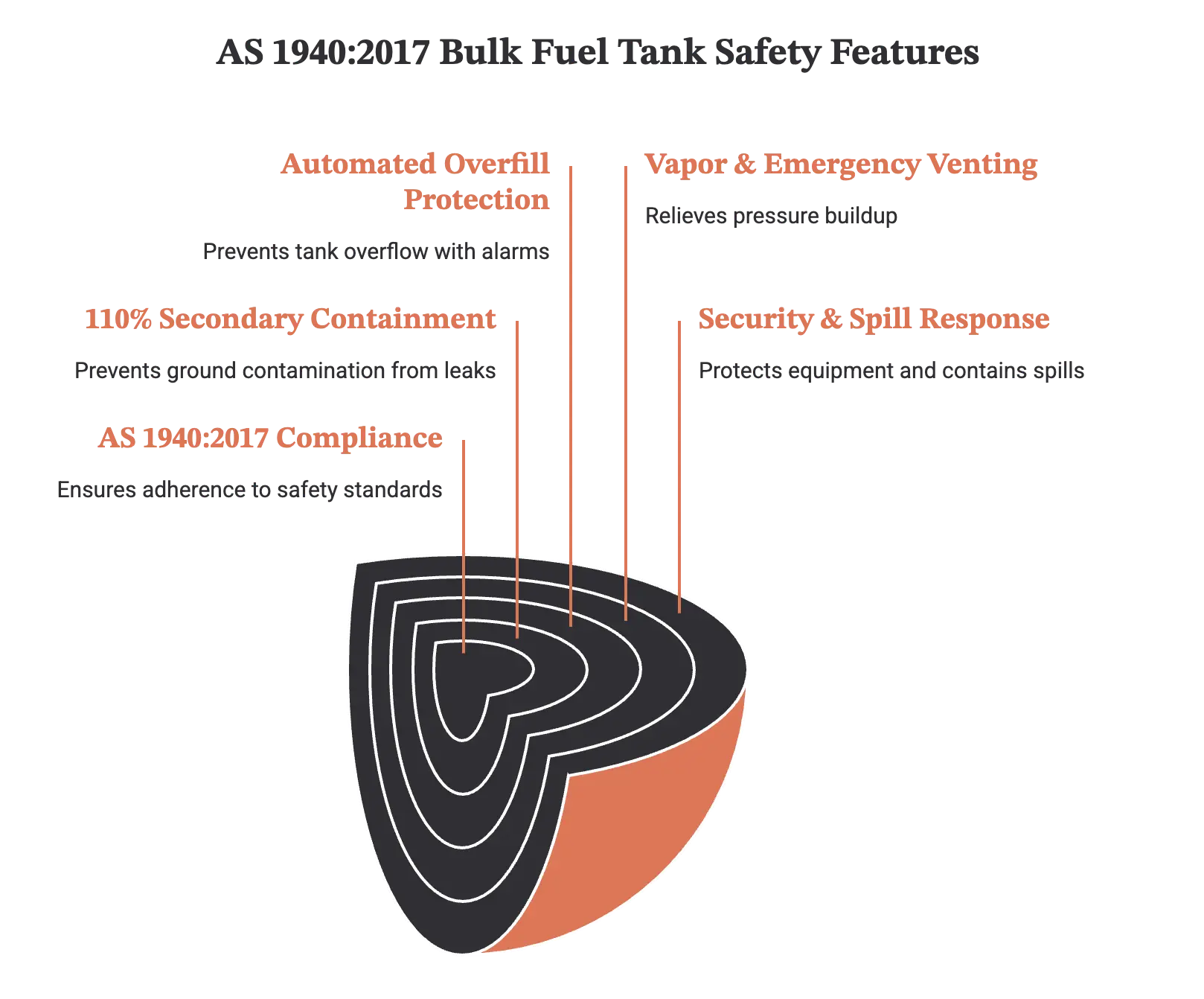
Once fuel reaches a business site, storage safety becomes the responsibility of the operator. All on-site bulk diesel storage is governed by AS 1940:2017 (The storage and handling of flammable and combustible liquids).
Australian standards require that bulk fuel tanks are:
- Installed on stable foundations
- Fitted with bunding to contain spills
- Equipped with overfill protection
- Ventilated correctly
- Positioned away from ignition sources
Bunding is particularly important. It is designed to contain fuel in the event of a leak, preventing soil and groundwater contamination.
Regular inspections are required to ensure tanks remain structurally sound.
Businesses storing fuel must also maintain appropriate signage and restrict access to authorised personnel.
Spill Prevention and Emergency Response
Spill prevention is central to bulk fuel safety. Both transport operators and onsite businesses must carry spill kits appropriate to the volume of fuel handled, and staff should be trained in clear, practical response procedures.
Emergency planning typically includes immediate containment measures, notification of relevant authorities where required, structured clean-up protocols, and thorough incident documentation.
In remote areas, where emergency services may be hours away, preparation becomes even more critical. Preventative systems reduce the likelihood of incidents, but strong response readiness ensures that if a spill does occur, it is contained quickly and prevented from escalating into environmental or operational damage.
Training and Staff Competency
Safety standards depend as much on people as they do on equipment. Even well-maintained infrastructure cannot compensate for poor handling practices. Ensuring staff are properly trained and competent is one of the most effective ways to reduce risk.
To strengthen training and competency standards:
|
Competency should be treated as an ongoing process, not a one-off requirement. A professional fuel supply partner supports this approach by maintaining strict driver qualifications, prioritising safety education and reinforcing consistent handling standards across every delivery.
Documentation and Compliance Records
Bulk fuel transport and storage involve detailed documentation.
Records typically include:
- Delivery dockets
- Batch numbers
- Volume confirmation
- Inspection logs
- Maintenance records
Accurate documentation supports compliance audits and regulatory reporting. It also provides traceability in the unlikely event of a product or equipment issue. Strong documentation practices demonstrate operational accountability.
Remote and Regional Safety Considerations
In remote Australia, safety planning must account for additional factors. Long transport distances increase exposure to mechanical failure or road hazards. Weather conditions such as heavy rainfall can affect access routes.
Remote sites must maintain:
- Adequate buffer stock
- Clear emergency communication protocols
- Reliable spill containment systems
Experienced suppliers understand the logistical challenges of servicing mining operations, agricultural properties and industrial sites in regional Western Australia. Preparation and planning are essential in these environments.
Continuous Improvement and Risk Management
Safety standards are not static. Regulations evolve. Equipment technology improves. Industry best practice advances. Reputable fuel suppliers and responsible site operators conduct regular reviews of:
- Infrastructure condition
- Staff training programs
- Emergency response procedures
- Compliance updates
Continuous improvement reduces long term risk. Businesses that treat safety as an ongoing process rather than a one-time setup create more resilient operations.
Conclusion
Bulk fuel plays a vital role in Australia’s economy, but its value depends on how safely it is managed. Transport and storage standards exist to protect drivers, site workers, infrastructure, surrounding communities and the environment.
Compliance is not just about avoiding penalties. It safeguards lives, reduces operational risk and protects business continuity.
For transport, construction, mining and agricultural operators, partnering with a supplier that prioritises safety ensures fuel is delivered and stored correctly in all conditions. In Australia’s varied operating environments, strong safety standards are the foundation of a reliable, long-term fuel supply.
Ensure Your On-Site Fuel Setup Meets Every Australian Safety Standard
From AS 1940-compliant deliveries to fully licensed DG transport and modern self-bunded tank solutions, Burk Fuel protects your operations with zero-compromise safety protocols.