If you run a business in Landsdale, fuel is not just a routine expense. It is part of how your operation runs day to day.
From tradies working out of home garages to fleet operators moving between Wangara and Malaga, the way you source fuel can directly affect your costs, efficiency, and downtime. Yet many local businesses still rely on the same approach they have always used. Pull into a servo, fill up, and move on.
That model works at a small scale. But as operations grow or become more time-sensitive, the limitations start to show.
In Landsdale, where businesses often operate across multiple nearby industrial zones and residential areas, the choice between servo fuel and bulk fuel is becoming more relevant. This guide breaks down both options in a practical, local context so you can decide what actually makes sense for your setup.
How Most Landsdale Businesses Currently Fuel Up
Take a typical small business in Landsdale. A plumber, electrician, or HVAC contractor working across suburbs like Darch, Madeley, and Wangara.
Most start their day early, head out with tools loaded, and fuel up when needed. That usually means stopping at a nearby servo, often during peak hours.
At first glance, it seems simple. There is no setup required, no storage concerns, and no upfront commitment. But over time, patterns start to emerge.
Drivers begin to notice:
- Time lost waiting during busy periods
- Inconsistent pricing between different servos
- Unplanned stops disrupting job schedules
For a single vehicle, this might not feel significant. But once you have multiple vehicles or tighter timelines, those small inefficiencies add up quickly.
What Servo Fuel Really Looks Like in Practice
Servo fuel is convenient, but it comes with trade-offs that are often overlooked.
Flexibility Without Commitment
You can fuel up anytime, anywhere. There is no need to plan deliveries or manage storage. This makes it ideal for:
- Sole operators
- Low-mileage businesses
- Irregular usage patterns
However, that flexibility comes at a cost.
Time Becomes the Hidden Expense
In Landsdale, peak traffic times can turn a quick stop into a delay. Whether it is early morning or late afternoon, waiting at a busy servo is common.
Now multiply that across:
- Multiple vehicles
- Multiple stops per week
The lost time starts to impact productivity.
Pricing Is Out of Your Control
Servo pricing fluctuates regularly. Businesses have little control over when prices spike or drop. Over time, this can lead to higher average fuel costs compared to negotiated supply options.
| Operational Factor | Stick with Servo Fuel | Upgrade to Bulk Fuel Delivery |
| Fleet Size | 1 to 2 light vehicles | 3+ vehicles or heavy machinery |
| Base Location | Mobile workers with no fixed depot | Fixed warehouse, yard, or home workshop |
| Schedule Type | Irregular or low-mileage days | Time-sensitive, daily scheduled runs |
| Primary Goal | Zero upfront infrastructure commitment | Maximum time efficiency and cost control |
What Bulk Fuel Looks Like for Landsdale Businesses
Bulk fuel changes the way businesses approach refuelling entirely.
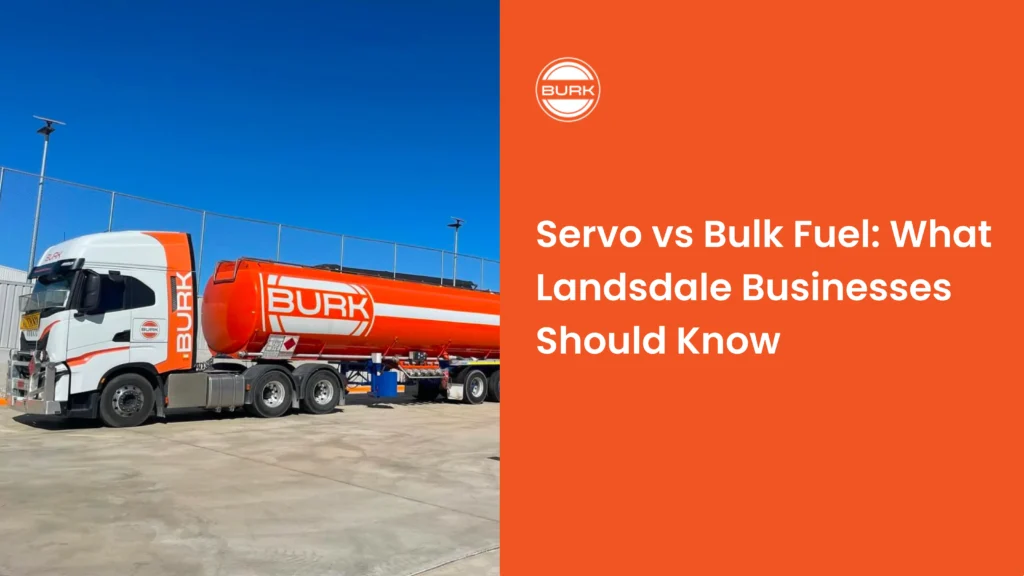
Instead of going to the fuel, the fuel comes to you.
Onsite Storage and Direct Access
With bulk fuel, businesses install a storage tank on-site. Fuel is delivered in scheduled quantities, allowing vehicles to refuel at the yard, depot, or worksite.
For Landsdale businesses, this can mean:
- Refuelling before heading out in the morning
- No detours during the day
- Better control over usage
Designed for Consistency
Bulk supply is not about one-off convenience. It is about building a consistent system.
Once set up, businesses can:
- Track usage more accurately
- Plan deliveries based on real consumption
- Avoid last-minute fuel runs
Better Fit for Growing Operations
Bulk fuel becomes more practical as operations scale. If you have:
- Multiple vehicles
- Daily fuel usage
- Predictable work schedules
Then bulk supply often aligns better with your needs.
The Real Difference Comes Down to Workflow
The biggest difference between servo and bulk fuel is not just cost. It is how each option fits into your daily workflow.
With Servo Fuel
Fueling is reactive. You stop when you need to. It interrupts your day, even if only briefly.
With Bulk Fuel
Fueling becomes part of your routine. Vehicles are filled before the day starts or when they return. It does not interrupt operations.
For a Landsdale-based business moving between job sites, this distinction matters. It is the difference between planning your day around fuel stops and removing them entirely.
Cost Comparison in a Landsdale Context
Many businesses assume bulk fuel is only about saving money. While cost is important, it needs to be viewed correctly.
Direct Fuel Costs
Bulk fuel often offers more stable pricing, especially when negotiated over time. This reduces exposure to daily price swings seen at servos.
Indirect Costs
This is where the real difference shows.
Consider:
- Time spent driving to and from servos
- Idle time waiting at pumps
- Disruptions to job schedules
In Landsdale, where jobs may be spread across nearby suburbs, these indirect costs can be significant.
For a business with multiple vehicles, even small time savings per day can translate into measurable gains over a month.
When Servo Fuel Still Makes Sense
Bulk fuel is not the right solution for everyone.
Servo fuel is still a practical choice if:
- You run a single vehicle
- Your fuel usage is low or inconsistent
- You do not have space for onsite storage
For many small operators in Landsdale, especially those just starting out, servos provide the flexibility needed without additional setup.
When Bulk Fuel Becomes the Better Option
Bulk fuel starts to make more sense when certain conditions are met.
You Are Running Multiple Vehicles
Coordinating fuel stops for several vehicles quickly becomes inefficient. Bulk supply centralises refuelling and saves time.
Your Work Is Time-Sensitive
If delays affect your ability to complete jobs on time, reducing fuel-related downtime becomes important.
You Operate from a Fixed Base
Many Landsdale businesses work from home workshops, small depots, or yards. This makes onsite storage a practical option.
You Want Better Control
Bulk fuel allows for better tracking, planning, and cost management over time.
A Local ExampleConsider a small landscaping business based in Landsdale with three vehicles. Using servo fuel, each vehicle stops two to three times per week. Each stop takes around ten to fifteen minutes including travel and waiting time. That adds up to several hours per week across the business. With bulk fuel, those stops are eliminated. Vehicles are fuelled on-site before heading out. Over time, the saved hours can be redirected into billable work. This is where the shift becomes clear. It is not just about fuel. It is about how time is used. |
The Direction Landsdale Businesses Are Moving Towards
As Landsdale continues to grow and more businesses operate across nearby industrial areas, efficiency is becoming a priority.
Business owners are starting to look beyond immediate convenience and think in terms of systems.
Servo fuel still has its place, but for many, it is no longer the most efficient option as operations scale.
Bulk fuel, on the other hand, aligns with how modern businesses want to operate:
- Planned rather than reactive
- Efficient rather than interruptive
- Controlled rather than variable
Conclusion
For Landsdale businesses, the choice between servo and bulk fuel is not about which option is better overall. It is about which one fits your current stage and way of working.
If your operation is small and flexible, servo fuel may still be the right choice. But as your business grows, the limitations of that model become more noticeable.
Bulk fuel offers a different approach. One that removes friction, saves time, and brings more control to your operations.
In a place like Landsdale, where efficiency can directly impact how much work you get done in a day, that difference matters more than most realise.
Whether you need a faster daily stop at our 24/7 Gnangara Road location or are ready to upgrade your yard to a dedicated bulk fuel tank, Burk Fuel provides tailored solutions for local northern suburbs businesses.
Frequently asked questions
It depends on the size of the tank and the zoning of your property. Small, self-bunded commercial tanks in industrial zones (like Wangara or Landsdale) often fall under minor storage exemptions, but you must still comply with standard AS1940 safety regulations. Your supplier can advise on specific local requirements.
Most commercial bulk fuel suppliers require a minimum delivery volume ranging from 500 to 1,000 litres per drop to ensure the logistics remain cost-effective and allow you to access genuine wholesale rates.
Yes, many suppliers offer tank rental or leasing programs tailored for SMEs. This allows local tradies and small fleet operators to switch to bulk fuel delivery without a massive upfront capital expenditure on infrastructure.