For many Australian businesses, fuel is not just another expense line on the balance sheet. It is what keeps projects moving, crews productive, and contracts on schedule. When a generator runs dry on a regional worksite or a prime mover is sidelined waiting for diesel, the cost is measured in downtime, penalties, and lost trust.
Across Western Australia, the Northern Territory, and remote freight corridors like the Nullarbor, bulk fuel delivery is the quiet system that keeps operations alive. It is not simply a truck dropping off diesel. It is a tightly managed supply chain involving terminals, compliance checks, transport logistics, and on-site safety procedures.
So what actually happens between the refinery and your storage tank? Here is a clear, practical breakdown of how bulk fuel delivery works in Australia, from supplier to your site.
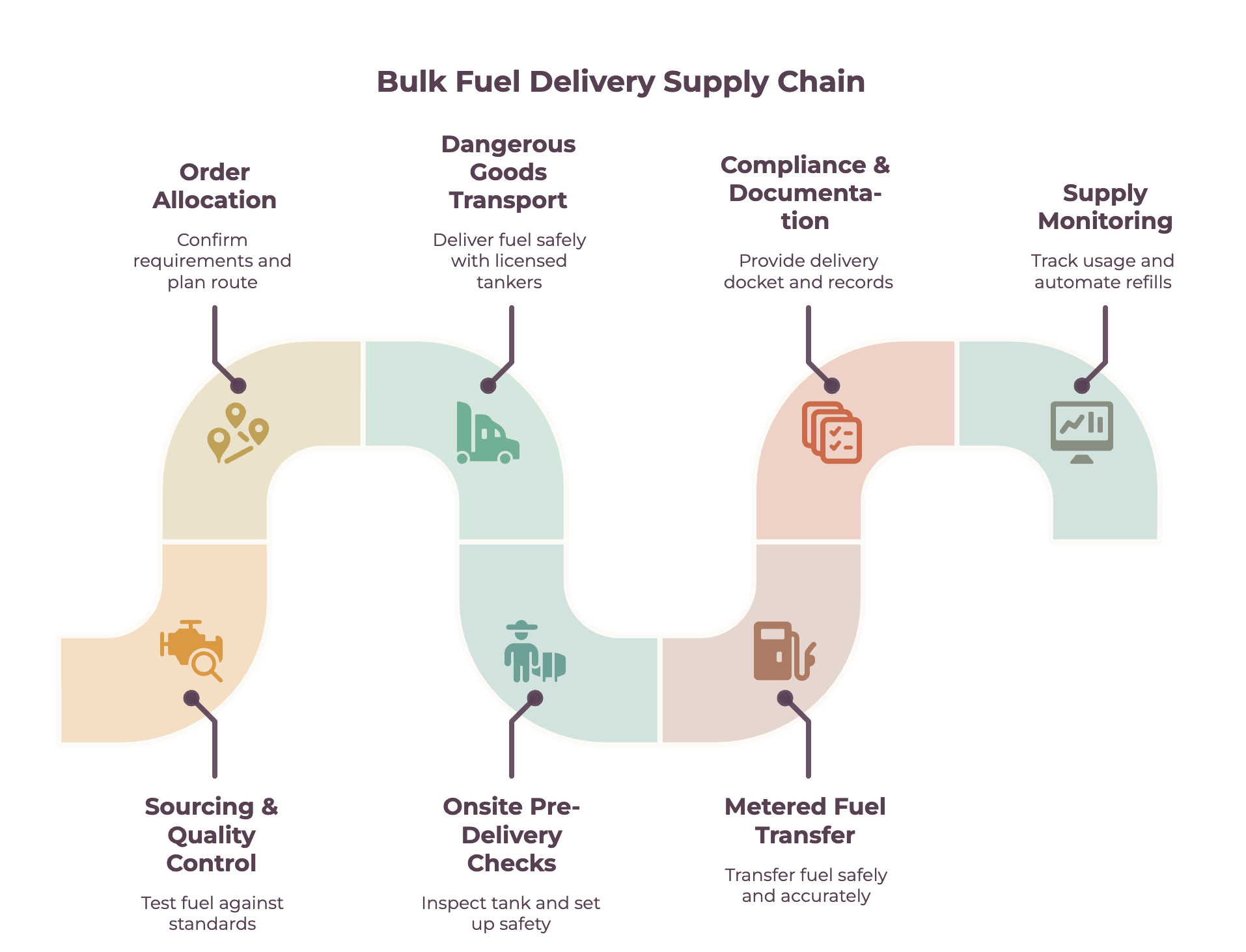
Step 1: Sourcing Fuel From Australian Refineries and Terminals
Bulk fuel supply begins at major refineries and import terminals across Australia.
Fuel is either refined locally or imported and stored at fuel terminals located in major ports such as Fremantle, Melbourne, Sydney and Brisbane. These facilities store large volumes of diesel, petrol and other fuels in certified storage tanks that meet strict Australian safety standards.
From these terminals, bulk fuel suppliers purchase fuel in large quantities. Pricing is typically linked to wholesale market benchmarks and influenced by global oil prices, shipping costs, and Australian fuel excise.
At this stage, quality control is critical. Fuel must meet Australian fuel quality standards under the Fuel Quality Standards Act. Testing ensures the correct octane rating, sulphur limits and compliance specifications before the product moves further down the supply chain.
Step 2: Allocation and Scheduling With Your Supplier
Once fuel is secured, the next step is allocation and delivery planning.
When your business places an order for bulk fuel delivery, the supplier confirms:
- Fuel type such as diesel, ULP or premium
- Volume required
- Delivery location
- Tank capacity onsite
- Site access conditions
In Australia, distances can be significant, especially for regional and remote sites. Delivery scheduling must account for travel time, road access, site operating hours and safety protocols.
For businesses with regular consumption patterns, many suppliers offer scheduled or automated deliveries. This ensures fuel levels are monitored and refilled before they drop too low, reducing the risk of downtime.
Step 3: Transport Through Licensed Fuel Tankers
Bulk fuel is transported using purpose-built tanker trucks that comply with Australian Dangerous Goods regulations.
These vehicles are designed specifically for fuel transport. They feature:
- Compartmentalised tanks for multiple fuel types
- Spill containment systems
- Fire safety equipment
- Grounding systems to prevent static discharge
Drivers are trained in handling hazardous materials and must hold the appropriate licences for transporting dangerous goods.
Before leaving the depot, the tanker is loaded with the correct fuel and documentation is completed. This includes safety paperwork and compliance records required under Australian transport regulations.
For long-haul deliveries across Western Australia or into remote mining regions, route planning is essential. Road conditions, weather, and access restrictions all play a role in safe fuel transport.
Step 4: Pre-Delivery Site Checks
Before any fuel is unloaded, the delivery driver performs a series of onsite checks.
These typically include:
- Verifying tank capacity
- Checking for leaks or visible damage
- Confirming the correct fuel type
- Ensuring safe access and clearance
Australian workplaces operate under strict Work Health and Safety legislation. Bulk fuel delivery must follow site-specific safety procedures, including exclusion zones and emergency response protocols.
If your site is subject to additional compliance requirements, such as a mining lease or government contract, they are also reviewed during delivery.
Step 5: Fuel Transfer Into Your Storage Tank
Once checks are complete, the fuel transfer begins.
The tanker is connected to your onsite storage tank using approved hoses and fittings. The driver grounds the vehicle to prevent static build up and monitors the transfer throughout the process.
Flow meters ensure the correct volume is delivered. The driver tracks fuel levels in real time to prevent overfilling.
Most Australian bulk fuel tanks are fitted with:
- Level gauges
- Overfill protection systems
- Ventilation systems
- Secondary containment such as bunding
If your tank is equipped with telemetry, your supplier may already know how much fuel you require before arrival. This technology allows for more efficient delivery planning and reduces the risk of emergency refills.
When the transfer is complete, hoses are safely disconnected and all fittings are secured.
Step 6: Documentation and Compliance Confirmation
After delivery, documentation is finalised.
You will typically receive:
- A delivery docket showing volume supplied
- Fuel type confirmation
- Date and time of delivery
- Compliance details
Accurate record keeping is essential for Australian businesses, particularly those claiming fuel tax credits. Clear documentation supports financial reporting and compliance with the Australian Taxation Office requirements.
For industries such as agriculture, mining and transport, these records are especially important when calculating operational costs.
Step 7: Ongoing Monitoring and Supply Management
Bulk fuel delivery is not a one-off transaction. For most Australian businesses, it is an ongoing partnership.
Suppliers often assist with:
- Consumption forecasting
- Tank monitoring systems
- Emergency refuelling support
- Seasonal demand planning
For example, farming operations may require increased diesel during harvest periods. Construction projects may ramp up fuel usage during major earthworks phases. Mining operations may operate around the clock and require strict supply continuity.
By analysing historical usage data, suppliers can help smooth out delivery schedules and reduce cost volatility.
Common Fuel Types Delivered in Bulk Across Australia
Bulk fuel delivery in Australia commonly includes:
Diesel
Diesel is the most widely delivered bulk fuel. It powers trucks, generators, heavy machinery, agricultural equipment and mining fleets.
High-turnover sites, such as transport depots and construction yards, rely heavily on a consistent diesel supply.
Unleaded Petrol
ULP is often delivered to fleet depots, marinas and remote communities where retail access is limited.
Premium Fuels
Premium grades may be required for specialised fleets or specific equipment.
AdBlue
Many suppliers also deliver AdBlue alongside diesel to support modern vehicles fitted with selective catalytic reduction systems.
Why Australian Businesses Choose Bulk Fuel Delivery
Bulk fuel delivery offers practical advantages for Australian operators.
Reduced Downtime
On-site storage means your machinery and vehicles can refuel immediately. There is no need for drivers to leave the site to visit a service station.
Cost Stability
Wholesale purchasing can offer better pricing compared to retail pump rates, particularly for high-volume users.
Improved Operational Efficiency
With fuel available onsite, scheduling becomes simpler. Fleet managers can track usage and allocate resources more effectively.
Remote Site Support
In regional Western Australia and other remote areas, bulk fuel delivery is often the only reliable supply option.
Conclusion
Bulk fuel delivery in Australia is a coordinated process involving sourcing, transport, compliance and careful onsite handling.
From refineries and port terminals to licensed tanker trucks and your storage tank, every stage is governed by strict safety and quality standards.
For businesses operating in construction, agriculture, transport, mining or remote services, reliable bulk fuel supply is not optional. It is essential.
Understanding how the process works helps you make better decisions about storage capacity, scheduling and supplier selection.
With the right partner, bulk fuel delivery becomes seamless. Your fuel arrives safely, on time and ready to power your operations across Australia.
Want to know if bulk delivery makes financial sense for your business? Read our guide to understand the real cost difference between bulk and retail fuel.