From the Pilbara to the Goldfields and across regional Queensland, heavy equipment, haul trucks and generators rely on a consistent diesel supply. When fuel stops, production stops. And in mining, downtime is expensive.
Fuel supply for mining operations is not simply about delivery. It is about reliability, planning and understanding the operational pressures of remote sites.
Here is how effective fuel supply solutions are structured for Australian mining environments.
Why Mining Sites Require Specialised Fuel Supply
Mining operations differ from most other industries.
They are often located in remote regions, operate continuously and consume significant fuel volumes every day. A single large haul truck can use thousands of litres per shift. Multiply that across an entire fleet and the numbers escalate quickly.
Mining fuel supply must account for:
- High daily diesel consumption
- Remote or isolated locations
- Strict safety requirements
- Environmental compliance
- Weather and access conditions
In Australia, many sites operate hundreds of kilometres from major fuel terminals. That distance shapes the entire logistics strategy.
Bulk Diesel Supply for High Volume Operations
Diesel is the primary fuel for most mining operations in Australia.
Bulk delivery is the standard model. Sites maintain large storage tanks, often holding tens or hundreds of thousands of litres, to ensure continuity of supply.
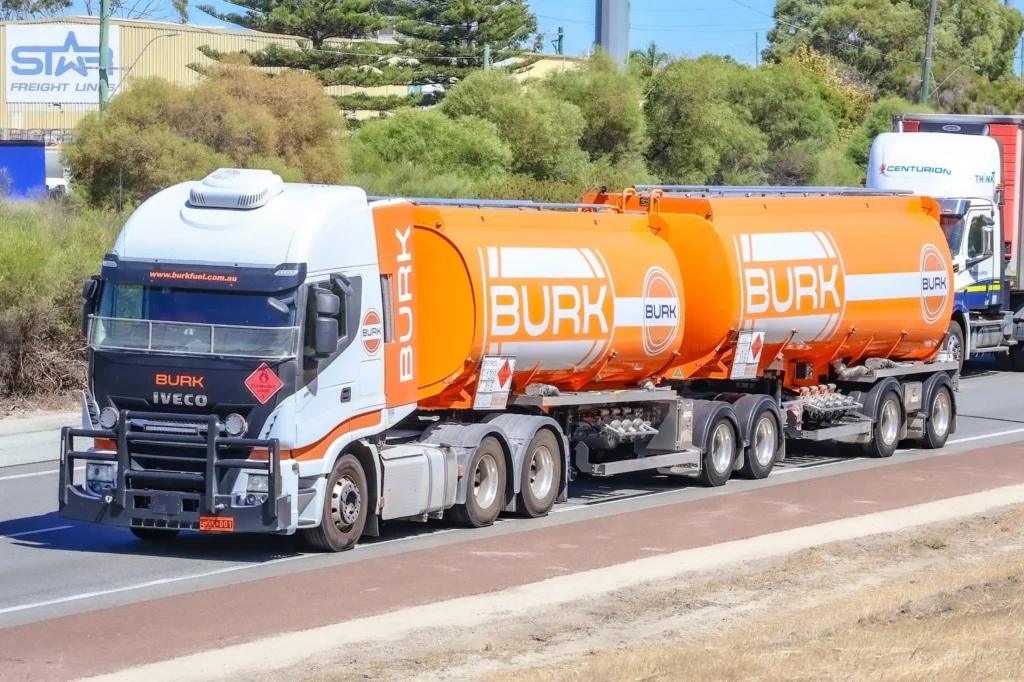
Fuel is transported via licensed tanker trucks, sometimes road trains, from regional terminals such as Perth, Geraldton, Port Hedland or Kalgoorlie. Delivery schedules are carefully planned to align with consumption forecasts.
For mining operators, the focus is not just on price per litre. It is on the security of supply.
A well-structured bulk supply program includes:
- Regular scheduled deliveries
- Buffer stock planning
- Clear reorder levels
- Contingency arrangements
Without these safeguards, even a minor delay can affect production output.
Remote Logistics and Risk Management
Remote fuel logistics in mining require precision.
Long transport distances increase exposure to road closures, weather disruptions and mechanical risks. During the wet season in northern Western Australia, some access roads can become temporarily impassable.
Reliable fuel supply partners plan for these risks in advance. That includes:
- Pre-season stock increases
- Alternate route planning
- Real-time vehicle tracking
- Clear communication protocols
Mining operators benefit from working with suppliers who understand regional conditions and can anticipate challenges before they escalate.
Onsite Fuel Storage and Infrastructure
Fuel storage infrastructure on mining sites must meet strict Australian standards.
Tanks are typically installed with bunding systems to prevent environmental contamination. Overfill protection, level monitoring and spill response equipment are mandatory.
Given the scale of consumption, mining operations often invest in:
- High-capacity storage tanks
- Dedicated refuelling bays
- Automated fuel management systems
- Tank telemetry monitoring
Real-time tank monitoring allows suppliers to track fuel levels remotely. Deliveries can then be scheduled proactively rather than reactively. For operations running 24 hours a day, this level of oversight is essential.
Wet Hire and Mobile Refuelling Services
In addition to bulk tank supply, many mining operations utilise onsite refuelling services.
Mobile refuelling units move across the site, directly fuelling heavy equipment during shift changes or downtime windows. This reduces operator travel and improves productivity.
For expanding sites or temporary exploration projects, mobile refuelling can be a flexible solution before permanent storage is installed.
A tailored approach often combines both models, depending on site size and lifecycle stage.
Fuel Quality and Compliance
Mining equipment operates under extreme conditions.
Fuel quality is critical to protect engines and avoid mechanical failures. Australian fuel must meet strict quality standards, including sulphur limits and specification requirements.
Reputable suppliers conduct quality control testing at terminal level and maintain strict handling procedures during transport and transfer.
Compliance extends beyond fuel quality. Mining sites must adhere to:
- Dangerous goods transport regulations
- Work Health and Safety laws
- Environmental protection standards
- Reporting requirements for fuel tax credits
Clear documentation supports operational transparency and regulatory compliance.
Managing Fuel Costs in Mining
Fuel represents a significant operational cost for mining companies.
While global oil prices influence wholesale rates, effective supply management can reduce overall expenditure.
Strategies include:
- Consolidated high-volume deliveries
- Accurate consumption forecasting
- Long-term supply agreements
- Efficient storage planning
By spreading fixed delivery costs across larger volumes, per litre transport expenses can be controlled. Strategic scheduling reduces emergency callouts, which typically carry higher costs. A structured supply plan protects both production and profitability.
Sustainability and Environmental Responsibility
Environmental stewardship is a major consideration in Australian mining. Fuel storage and handling must minimise risk to land and groundwater. Proper bunding, regular inspections and spill prevention procedures are non-negotiable.
Some mining operations are also exploring alternative fuels or emissions reduction strategies.
Suppliers who understand evolving environmental expectations can support sites in balancing operational efficiency with sustainability commitments.
The Importance of Supplier Partnership
Fuel supply for mining operations is not transactional. It is strategic.
Mining companies require suppliers who:
- Understand remote logistics
- Offer dependable delivery schedules
- Maintain strict safety standards
- Provide responsive support
- Communicate clearly
Strong supplier relationships reduce uncertainty.
For Australian operators, partnering with a bulk fuel provider that understands regional challenges can make a measurable difference in reliability and planning confidence.
The Bottom Line
Mining is a cornerstone of the Australian economy. From iron ore exports in the Pilbara to gold production in regional WA, the sector depends on an uninterrupted fuel supply.
Reliable bulk fuel delivery, supported by strong logistics and compliance systems, keeps haul trucks moving and crushers operating.
For mining operations, fuel supply must be steady, predictable and professionally managed.
With the right planning and the right supply partner, fuel becomes a stable foundation rather than a vulnerability.
In a sector where every hour counts, dependable fuel solutions keep Australia’s mining industry moving forward.