Fuel is one of the largest operating expenses for many Australian businesses. Yet when it comes to purchasing, some companies still rely on retail bowsers while others invest in bulk supply agreements.
At first glance, the difference seems simple. Retail fuel is bought per fill at a service station. Bulk fuel is delivered directly to your site in larger volumes.
In reality, the pricing structure behind each model is very different.
For transport operators in Perth or construction contractors working across metropolitan and remote sites, understanding the true cost comparison is essential.
Here is how bulk fuel supply stacks up against retail purchase in Australia.
How Retail Fuel Pricing Works in Australia
Retail fuel prices are the figures displayed on the board at your local service station. They reflect a combination of global and local cost pressures layered together before the fuel reaches the pump.
Retail pricing is influenced by several key factors:
- Global crude oil prices
- Refining and import costs
- Australian fuel excise and GST
- Wholesale terminal gate pricing
- Retail operating costs
- Market competition and local demand
In metropolitan markets such as Perth and Melbourne, prices often move in predictable fuel cycles. Within a single week, pump prices can rise sharply before gradually easing again. Businesses refuelling during peak points in the cycle can end up paying materially more.
Service stations also carry significant overheads. Land values, staffing, electricity, maintenance, environmental compliance and convenience store operations all contribute to the final pump price. Those costs are built into every litre sold.
For private motorists, this system is generally manageable. For high-volume commercial users consuming thousands of litres per week, exposure to fluctuating retail pricing can create cost volatility and reduce budgeting certainty.
How Bulk Fuel Pricing Works
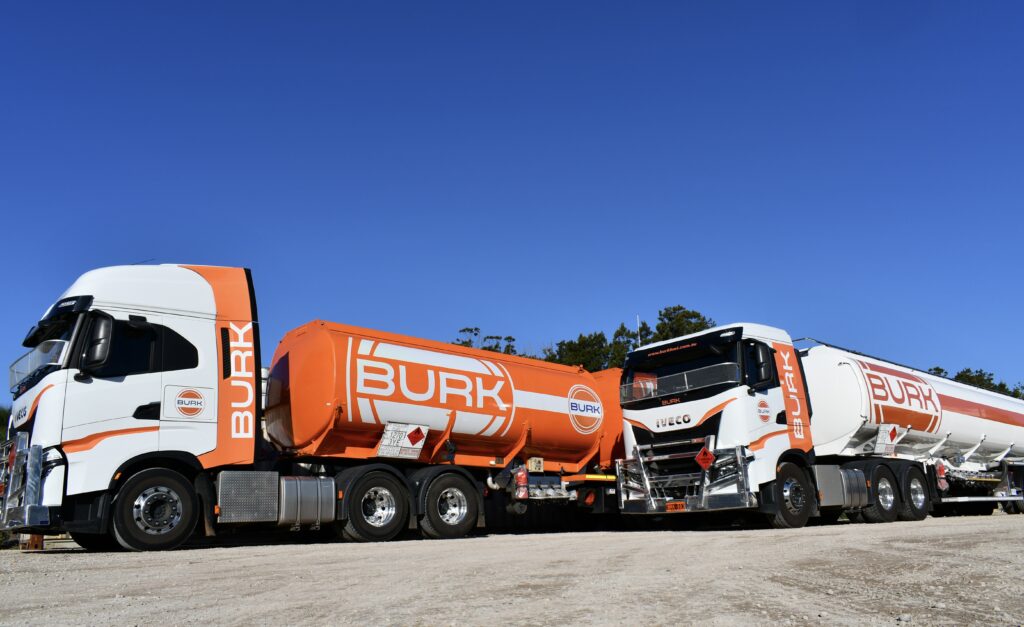
Bulk fuel pricing is typically linked to wholesale terminal gate pricing rather than the retail pump rate displayed at service stations. Instead of buying fuel litre by litre at a servo, suppliers purchase large volumes directly from fuel terminals and transport it to your site.
The final price per litre under a bulk arrangement generally reflects:
- Wholesale fuel cost
- Transport and delivery charges
- Supplier margin
- Government excise and applicable taxes
Because bulk supply bypasses many retail overheads, such as storefront operations, staffing and convenience retail costs, it can deliver more competitive pricing for businesses consuming higher volumes.
Bulk agreements also tend to offer greater pricing transparency. Under structured supply contracts, businesses can see how pricing is linked to wholesale benchmarks, making cost movements easier to understand and forecast over time.
The Volume Factor
The most significant difference between bulk and retail fuel pricing comes down to volume. Retail purchases are made in small increments, usually limited to individual vehicle tank capacity. Bulk deliveries, by contrast, can involve thousands or even tens of thousands of litres in a single drop.
When transport costs are spread across a larger delivered volume, the delivery cost per litre decreases. As total consumption rises, the per litre impact of freight and logistics reduces accordingly. This is why bulk supply generally becomes more cost effective as fuel usage increases.
Cost Stability and Budgeting
Retail fuel prices can fluctuate daily, particularly in larger metropolitan markets where weekly price cycles are common. Businesses relying on retail supply are exposed to pricing swings driven by holiday demand spikes, regional differences and short term market volatility.
For fleet operators and contractors, this unpredictability makes budgeting more difficult and margin control less precise. Bulk fuel supply agreements, while still influenced by global oil markets, are typically linked to wholesale benchmarks and structured pricing models. That framework tends to be more stable than retail pump cycles, improving forecasting accuracy and financial planning confidence.
Time and Productivity Costs
Retail refuelling is not just about fuel price.
It involves:
- Travel time to service stations
- Waiting during peak hours
- Driver downtime
- Administrative tracking challenges
For a transport fleet, even 15 minutes per refuel multiplied across multiple vehicles and days can add up to significant productivity loss.
Bulk supply allows vehicles to refuel onsite at the depot level. Construction equipment can be refuelled directly at project sites.
Time savings translate into operational efficiency.
Retail pricing may look comparable on paper, but hidden productivity costs change the equation.
Regional and Remote Considerations
Location plays a major role in fuel pricing.
In remote mining corridors, retail service stations may charge higher pump prices due to transport distance and limited competition.
Bulk supply in these regions may offer stronger value because deliveries are structured and negotiated in advance.
For remote operations, retail purchase may not even be a practical option.
Bulk fuel delivery ensures continuity of supply regardless of proximity to urban centres.
Cash Flow and Capital Considerations
Bulk fuel requires larger upfront purchases.
Businesses must consider:
- Storage capacity
- Working capital availability
- Delivery minimum order quantities
Retail purchases spread spending over time but often at higher per litre rates.
For growing businesses, balancing cash flow with long-term savings is important.
Installing onsite storage involves capital investment. However, the cost savings from wholesale pricing and improved efficiency can offset this over time.
Compliance and Documentation
Bulk fuel deliveries are accompanied by structured documentation, which strengthens fuel tax credit claims, simplifies financial reporting, improves usage tracking and supports audit compliance. In contrast, retail purchasing often requires collecting and reconciling multiple receipts across vehicles and drivers.
For businesses in eligible sectors such as agriculture and mining, bulk supply can significantly streamline record-keeping and reduce administrative burden. Administrative efficiency is not just convenient. It protects compliance and saves time.
When Retail Purchase May Make Sense
Bulk supply is not automatically the right answer for every operation. For some businesses, retail purchasing remains the more sensible and flexible option.
Retail refuelling can make sense for:
- Very small fleets with limited weekly fuel consumption
- Low-volume operators whose usage fluctuates unpredictably
- Short-term projects where installing storage tanks is not viable
- Businesses without suitable onsite infrastructure or compliance capacity
If total fuel consumption is modest, the cost of installing and maintaining bulk storage may outweigh the pricing benefit. In those situations, fuel cards combined with controlled retail purchasing can offer simplicity without tying up capital.
The key is alignment. The supply model should reflect real consumption patterns, not assumptions. For smaller or transitional operations, retail fuel can provide the flexibility needed without unnecessary investment.
When Bulk Fuel Supply is the Practical Choice
Bulk fuel supply tends to shift from optional to strategic once usage reaches a certain scale. It is rarely about a single delivery. It is about sustained volume, operational continuity and efficiency gains over time.
Wholesale arrangements typically become more cost-effective when weekly consumption is substantial, operations are ongoing rather than short-term, and on-site refuelling reduces time lost to retail trips. In regional areas where pump pricing can fluctuate sharply, bulk delivery often provides greater pricing stability. Where fuel tax credits apply, structured bulk purchasing can also improve administrative clarity and reporting accuracy.
Industries such as transport, mining, agriculture and large-scale construction usually see the strongest benefits. These sectors operate high-utilisation assets where downtime carries a real financial impact.
As fuel volume increases, the commercial case for wholesale supply strengthens. At scale, bulk delivery is not just about cheaper litres. It is about control, efficiency and long-term operational certainty.
Operational Reliability Matters More Than Price
Price always matters, but reliability matters more. A few cents per litre saved means little if operations stall because fuel is unavailable when you need it.
Relying on retail supply exposes businesses to variables outside their control, including station outages, long queues during peak periods, sudden price spikes and regional supply shortages. In tight markets or during seasonal surges, these risks increase.
Bulk supply, when structured and scheduled properly, removes much of that uncertainty. Fuel is delivered directly to the site in line with your consumption profile, reducing disruption and protecting uptime.
For fleet depots in Perth, farms across the Wheatbelt or industrial facilities operating nationwide, operational continuity is non-negotiable. Fuel availability is not just a convenience. It underpins productivity, deadlines and revenue.
Conclusion
Comparing bulk supply and retail purchase is not just about the pump price. It is about control, predictability and long-term efficiency.
When weekly usage, storage capacity, regional location and cash flow are assessed properly, the right supply model becomes clearer. Retail purchasing may work for smaller or short-term needs, but as consumption grows, bulk supply generally delivers stronger cost control and operational stability.
A structured fuel strategy reduces exposure to pricing volatility and sharpens planning confidence. Fuel is not just a commodity. It is a core operational input. Choosing the right supply model helps ensure your business stays competitive in Australia’s demanding commercial environment.